Barbecue

Food safety requires the right temperature

One of the best way for individuals to keep themselves clear from sickness from badly prepared food is by having good habits.

Keep your barbie food-safe this summer

Summer’s here, and that means it’s prime time to fire up the barbie and enjoy a meal outdoors with mates. But while the weather’s perfect for BBQs, it’s also the peak season for foodborne illness. So if you’re cooking outside, here are some simple tips to keep your food safe and your guests happy.

Wash your hands properly

Before and after handling food — especially raw meat — wash your hands with soap and warm water for at least 20 seconds. It’s a small step that makes a big difference.

Marinate smart

Always marinate in the fridge, not on the bench or outside. If you want to reuse marinade, boil it first before brushing it onto cooked food. Better yet, set aside a clean portion of marinade to use as a sauce later. Don’t rely on heat alone to kill off anything that’s been in contact with raw meat.

Get your grill ready

Preheat your coals for 20–30 minutes, or until they’re lightly coated with ash. That’s when they’re hot and ready to cook evenly.

Partial cooking? Time it right

If you’re using the microwave, oven or stove to partially cook food before grilling, do it right before it hits the grill. It’ll save time, reduce flare-ups, and often gives you better results — especially with chicken.

Cook to the right temp

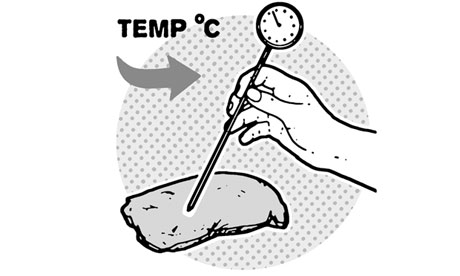
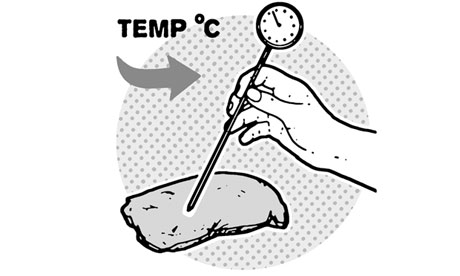
Use a food thermometer to check internal temperatures. Stick it in the thickest part of the meat, avoiding bone, fat or gristle. Check a few spots to make sure it’s cooked evenly.

Here’s what you’re aiming for:

Food Safe internal temperature
Beef, veal, lamb (steaks/roasts) 63°C for medium rare (rest 3 mins), 71°C for medium
Ground pork and beef 71°C
Poultry 74°C minimum
Fin fish 63°C or until opaque and flakes easily
Shrimp, lobster, crab Pearly and opaque
Clams, oysters, mussels Cook until shells open

Don’t cross-contaminate

Never put cooked food back on the same plate that held raw meat, seafood or eggs. Keep clean utensils and platters handy so you’re not scrambling mid-cook.

Keep it hot

Once it’s cooked, you can keep food warm by moving it to the side of the grill — away from direct heat — so it doesn’t overcook.

Watch the danger zone

On a warm day, don’t leave food sitting out between 5°C and 60°C for more than an hour. That includes raw meat, cooked food, eggs, and even cut fruit and veg. If in doubt, chuck it in the fridge.

[remotepage page="shipping-insurance.html"]
Latency explained

What is latency?

Latency, when it comes to temperature logging, refers to the delay between a change in temperature and when that change is detected and recorded by the logger. This delay can be due to the sensor’s design, the materials it’s placed in, or the logging interval. While it might sound like a disadvantage, latency can actually serve a useful purpose in certain environments—particularly where short-term temperature spikes are common but not harmful.

For example, in a busy commercial fridge, the temperature may briefly rise every time the door is opened. A logger with high latency won’t immediately react to these short fluctuations, helping to avoid unnecessary alarms or false data indicating a problem when there isn’t one. In these cases, a slight delay in response acts like a filter, focusing attention on real issues—such as prolonged exposure to unsafe temperatures—while ignoring the everyday ups and downs that don’t affect product quality or safety.

Differrnt connections

Connecting your logger

Depending on the type of logger you have, connecting your logger to your PC means either:

  • inserting into the Reader,
  • plugging it into a USB port, or
  • connecting it via a USB cable.
comparing gen1 and gen 2

What's so good about USB?

First Generation LogTags use a separate Reader (sometimes called a dock) for configuration and for downloading recorded data. 

The Second Generation loggers only require a USB port or cable. Apart from saving the cost of the Reader, this makes them much better suited for shipping, because the recipient doesn’t need a LogTag Reader to download a report about the shipment’s journey.

comparing gen1 and gen 2